Insect Architects: The Engineering of Wasp Nests
Category: Insects | June 16, 2025
When we think of architects, we often imagine people sketching blueprints or creating designs. However, in the insect world, wasps are some of nature's best builders. They create everything from small mud homes to large paper domes hanging from trees. Wasp nests show the precision, ingenuity, and resourcefulness of these often-misunderstood insects.
**Paper from Wood, Without Machines**
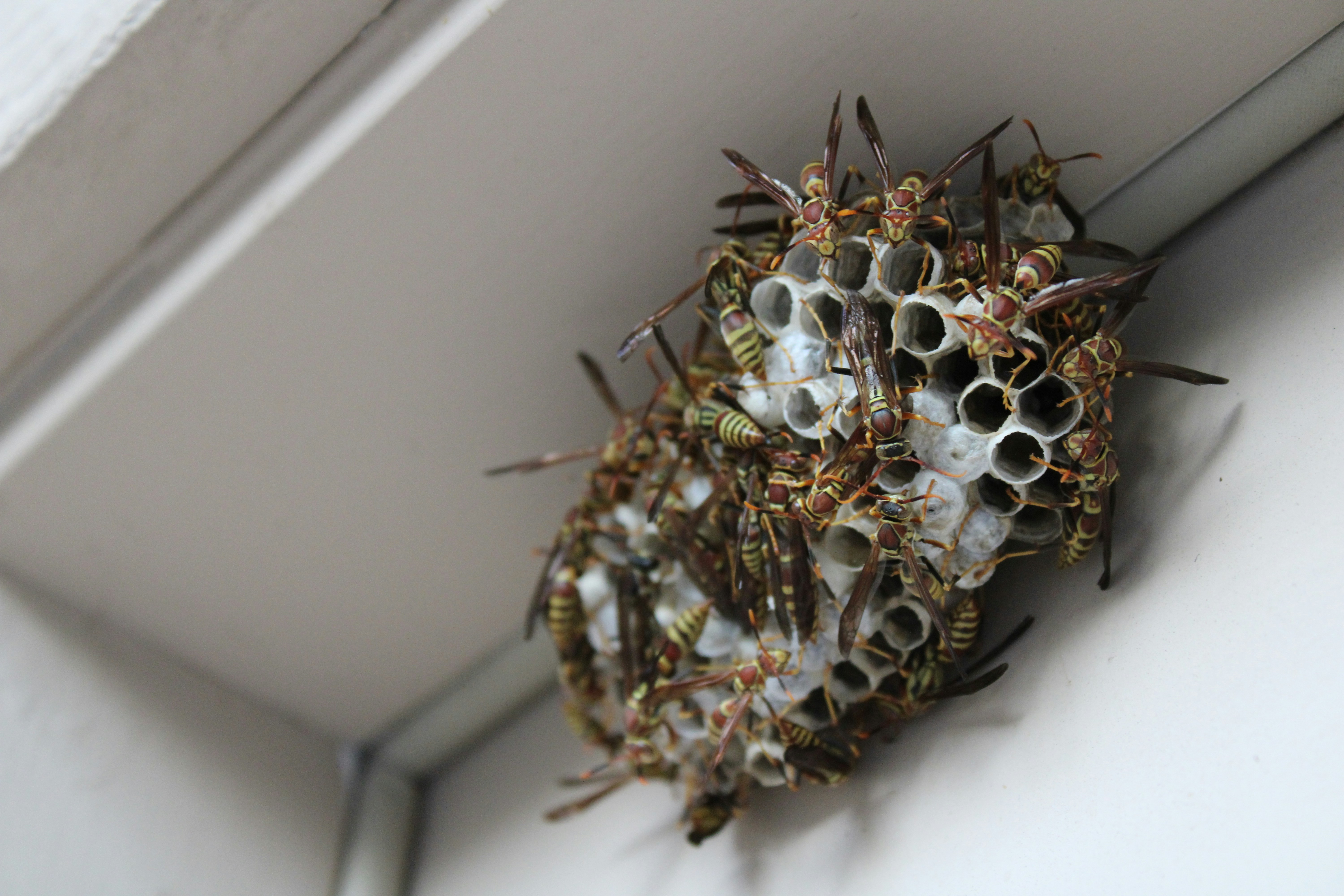
Most social wasps, like yellowjackets and hornets, build their nests from chewed wood fibers. They peel away bark and weathered wood, mixing it with saliva to form a pulp. This paste dries into a lightweight material that closely resembles paper. Layer by layer, they create multi-chambered homes that protect their colonies from predators and the elements.
**The Geometry of Nature**
Inside the nest, wasps create hexagonal cells in perfect alignment. These hexagons are space-efficient, allowing wasps to fit the most larvae in a small area, and they are structurally sound. This pattern, also used by bees and other insects, is a marvel of biological engineering.
**Form Follows Function**
Every part of the nest has a specific role. The outer shell keeps the colony insulated and keeps out moisture. The inner core is where the queen and developing larvae are found, while worker wasps flap their wings to help regulate the temperature. Some species build vertical nests attached to branches, while others hide them underground or in wall cavities, depending on their needs.
**Solo vs. Social Builders**
While social wasps live in colonies and build large communal nests, solitary wasps are equally impressive. For instance, mud daubers create complex nests from small balls of mud, forming tubes where they lay eggs and store paralyzed prey for their larvae to eat.
**Adaptive Construction**
Wasps are flexible builders. If a nest gets damaged, they quickly repair it. When materials are limited, they creatively use whatever resources are available, including man-made ones. Some urban wasps have been seen using newspaper scraps or cardboard in their nests.
**Not Just Stingers**
Often feared for their sting, wasps are more than just nuisances. Their nests reflect the intelligence of instinct. They don’t study architecture; instead, they inherit it through evolution, built into their behaviors over millions of years.
**Living Blueprints**
Each nest tells a story of precision, cooperation, and survival. It serves not only as shelter but as a living example of how tiny insects can create some of nature's most efficient, elegant, and functional structures.
Next time you see a wasp nest, look beyond the noise and appreciate the architecture shaped by instinct.
🌴 Jungle Chatter
Most popular reactions:
No reactions yet.