Parrots and Their Astonishing Vocabulary
Category: Birds | June 14, 2025
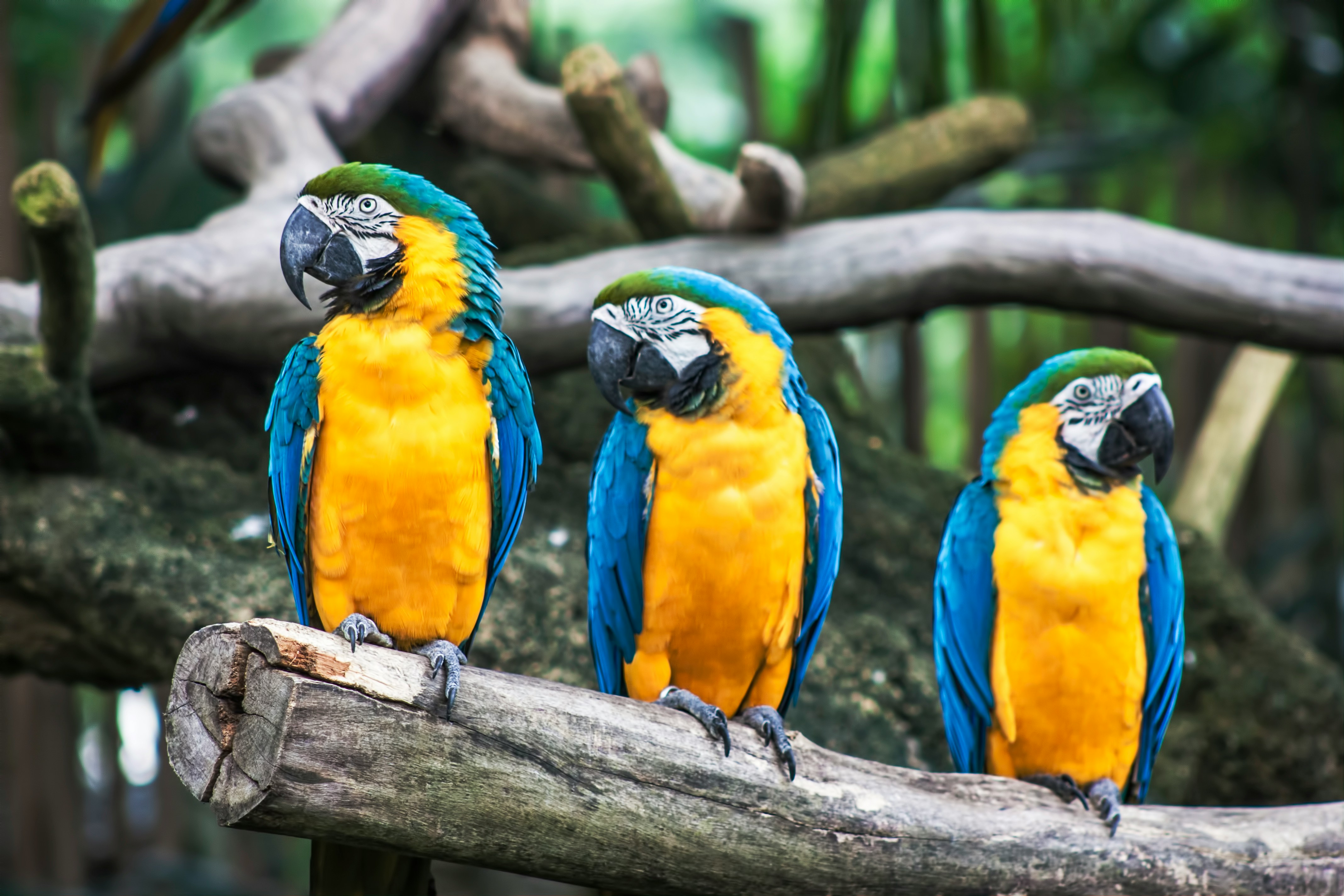
Parrots have fascinated people for centuries with their bright feathers and, even more impressively, their ability to "talk." They can mimic words and phrases, as well as replicate household sounds with remarkable accuracy. This sets them apart in the animal kingdom for their vocal talents.
However, parrots are not just imitators. They are smart, social animals with cognitive skills similar to those of young children. Species such as the African Grey Parrot can not only mimic speech but also understand basic concepts like numbers, colors, and categories. A well-known example is an African Grey named Alex, who could identify objects by name, count up to six, and express simple wants like "want grape."
How do parrots achieve this linguistic skill? Unlike humans, they lack vocal cords. They instead make sounds using their syrinx, a muscular structure located at the base of their trachea. With precise control over their syrinx and airflow, parrots can create many sounds, from human words to environmental noises like doorbells or alarms.
Parrots also have a developed brain area known as the "song system," which is more advanced than that of most other birds. Research has also pointed out a unique area called the "core and shell," which seems to play a role in complex vocal learning. This area is functionally similar to the parts of the human brain responsible for speech.
Why do parrots mimic? In the wild, they use vocal learning to communicate with their flock, set up territory, and form bonds. In captivity, humans become their surrogate flock. Mimicry may help them fit in and socialize with their surroundings. For social species, communication is vital for survival, and mimicry shows mental flexibility.
Despite their talking ability, parrots also display problem-solving skills, empathy, and memory. This combination of vocal talent and cognitive ability makes them some of the most intelligent non-human animals on Earth.
🌴 Jungle Chatter
Most popular reactions:
No reactions yet.