Praying Mantises: Silent Assassins
Category: Insects | June 16, 2025
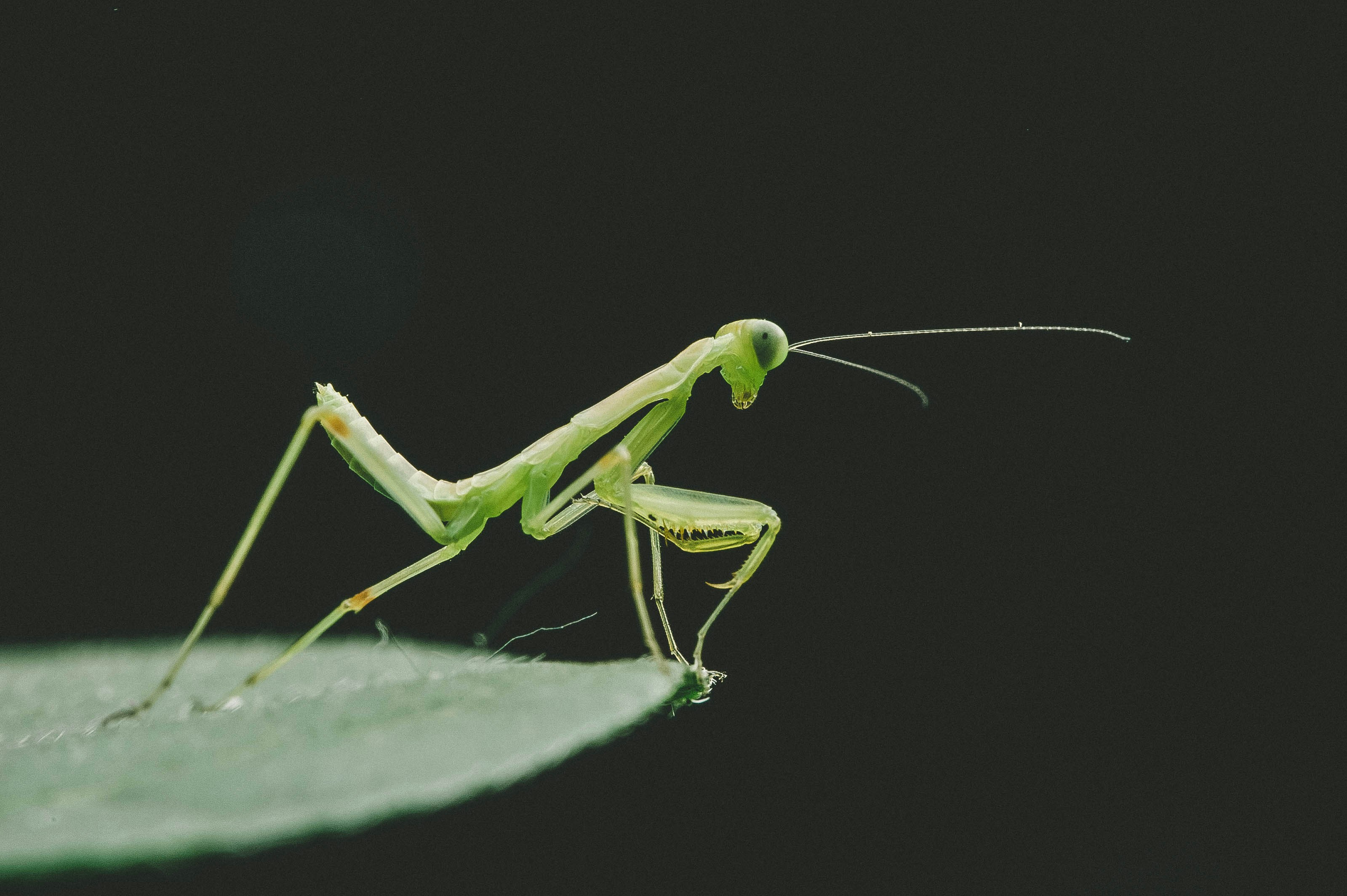
Poised with front legs folded in a prayer-like stance, the praying mantis looks calm and almost respectful. But beneath this quiet appearance is a ruthless hunter, an insect built for stealth, speed, and precision.
**Predators with Perfect Posture**
Praying mantises belong to the order Mantodea and are named for their unique forelimbs, which they use like spiked arms to grab prey. These limbs are incredibly strong and fast, allowing the mantis to snatch insects, and sometimes small birds or reptiles, with incredible speed.
**Masters of Camouflage**
Mantises are often green or brown, blending seamlessly into plants, which makes them nearly invisible to both their enemies and their prey. Some species imitate leaves or flowers so convincingly that unsuspecting insects land directly on them and meet their end in an instant.
**Keen Vision and Deadly Timing**
With triangular heads and large compound eyes, mantises have great binocular vision. They can spot the slightest movement and judge distances accurately, enabling precise strikes. Unlike most insects, they can turn their heads up to 180 degrees to track prey.
**Ambush Artists**
Mantises are ambush predators. They often stay motionless for a long time before lunging forward in a fraction of a second. Their reaction time is so quick that it’s nearly impossible to see with the naked eye.
**A Complex Reputation**
While they are well-known for their hunting skills, mantises also have unusual mating behavior. In some species, females may eat their mates after or even during mating—a behavior thought to give extra nutrition for egg development. However, this doesn’t happen every time and varies among species.
**Nature’s Silent Warriors**
Praying mantises balance elegance and danger. Their role in nature as both predator and prey is crucial in maintaining balance and biodiversity. Watching one in action shows a near-perfect example of evolution’s design—silent, still, and swift.
🌴 Jungle Chatter
Most popular reactions:
No reactions yet.